Who's responsible for fire safety in strata buildings?
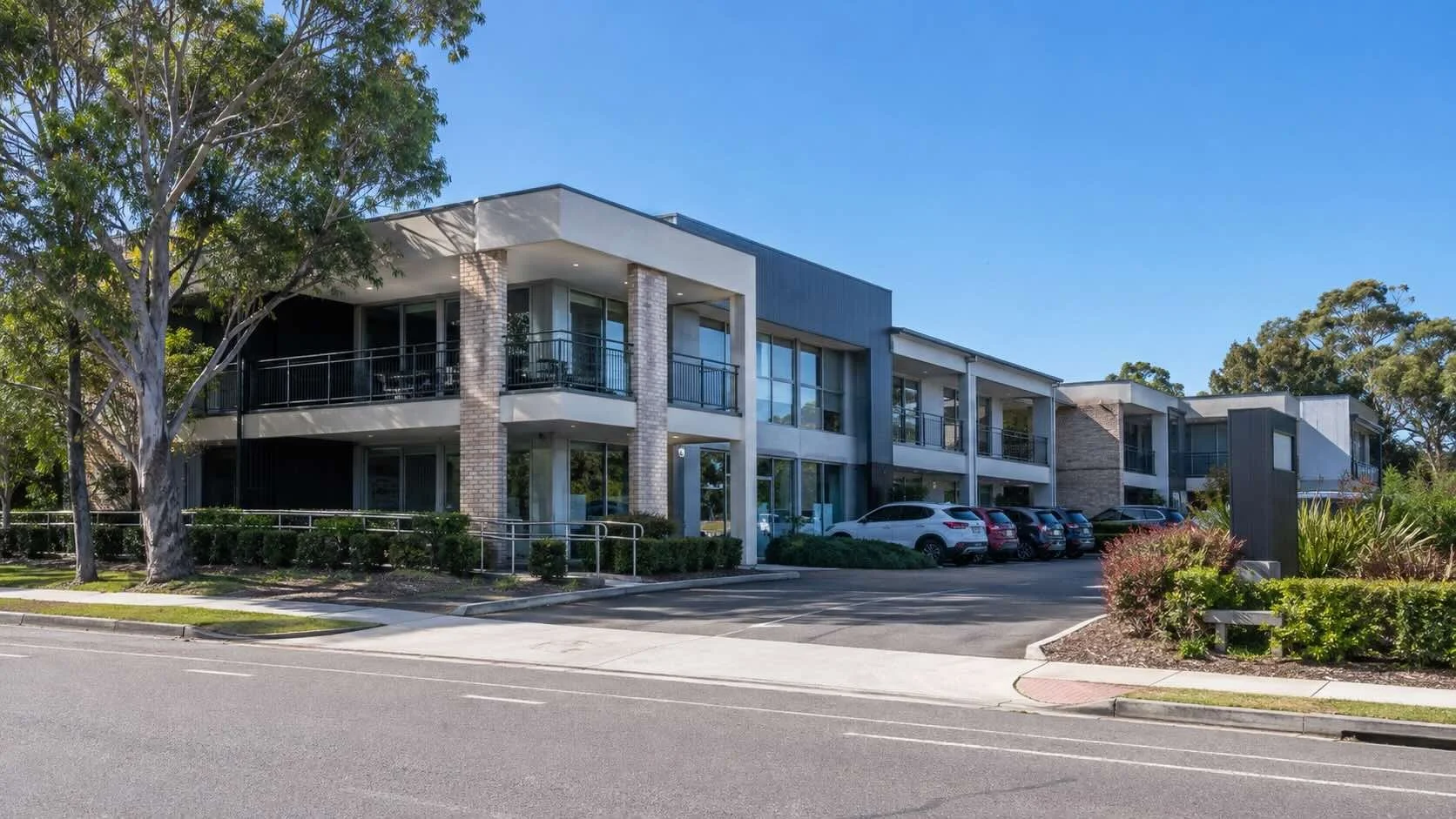
If you manage or own a strata building in Wollongong, fire safety is one of those jobs that sits in the background – until a sudden deadline, a council letter, or a failed inspection drags it to the front. And by that point, it's usually urgent and expensive to fix.
The hardest part of fire safety is working out who is responsible for what. In a strata scheme, that line gets blurry fast, and the wrong assumption can leave an Owners Corporation exposed. So here's a rundown of how it works in NSW, who carries the legal weight, and where things tend to go wrong.
Why strata buildings carry more fire risk
A standalone house has one owner making decisions. A strata complex has many, plus shared walls, shared stairwells, shared services, and a mix of tenants who all assume someone else is handling safety.
That shared structure is exactly what makes fire risk higher. A fault in a common-area fire door or a blocked exit doesn't affect one unit. It affects everyone above, below and beside it. Most of the strata buildings we look after across the Illawarra are mixed-use too, with commercial tenancies downstairs and residents or offices above, which adds another layer of obligations.
Who holds the legal responsibility
In NSW, the legal duty for fire safety on common property sits with the Owners Corporation. Not the strata manager, not the contractor. The Owners Corporation.
That covers things like:
Fire-rated doors in lobbies, corridors and stairwells
Fire-resistant walls, floors and ceilings
Passive fire protection, such as fire collars, sealants and penetration seals
Door hardware that keeps fire doors compliant, like closers and seals
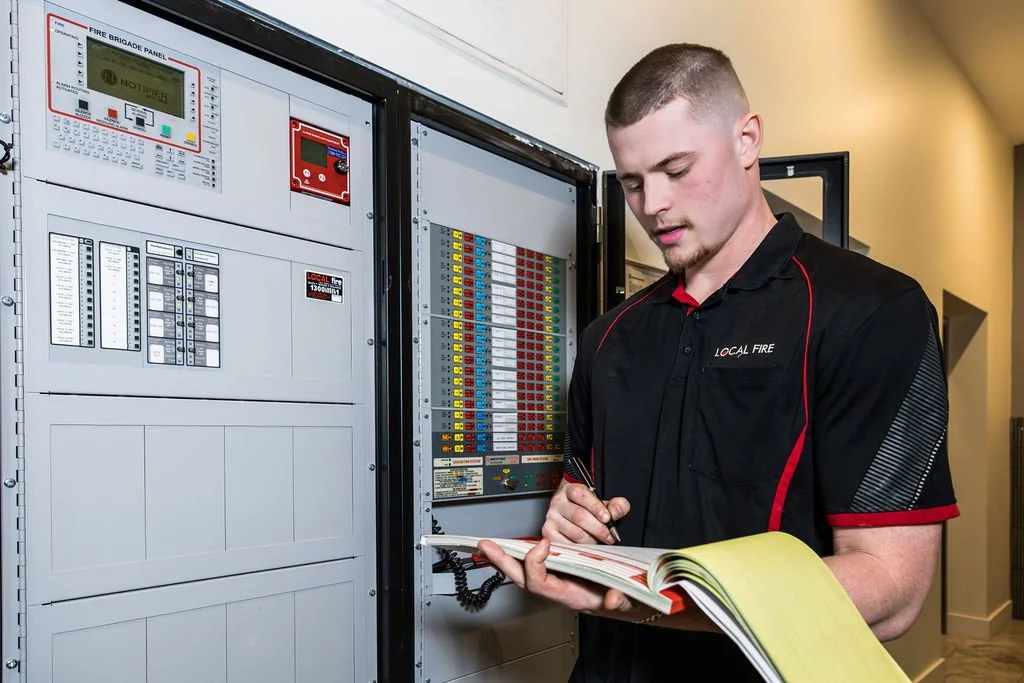
The Owners Corporation is also the body that has to arrange annual inspections, engage an accredited practitioner, and lodge the Annual Fire Safety Statement (AFSS) each year. This sits under Part 12 of the Environmental Planning and Assessment (Development Certification and Fire Safety) Regulation 2021. The owner signs the declaration. The accreditation and the liability both land with them.
One thing committee members often miss: this can reach you personally. Where a committee hasn't taken reasonable steps to keep fire safety measures maintained, individual members can be exposed, not just the scheme as a whole. It's why a lot of volunteer committees lean on a fire safety contractor who keeps them on track.
Where the strata manager fits
The strata manager usually does the legwork, even though the legal liability stays with the owners. In practice that means booking the inspections, keeping the compliance records, coordinating contractors, and making sure the AFSS gets lodged with council and Fire and Rescue NSW on time.
It's a coordination role, and a genuinely important one. A good strata manager keeps the whole thing on schedule so nobody's scrambling three days before a deadline. But booking the work isn't the same as carrying legal responsibility for it, and that distinction matters when something goes wrong.
Fire doors: common property or the lot owner?
This is the question that causes the most confusion, so here's the rough split:
Fire doors in common areas like stairwells and corridors are the Owners Corporation's responsibility.
Fire doors to individual units that open onto common property are usually the Owners Corporation's too.
Fire doors inside a unit (a garage-to-internal door, say) are generally the lot owner's.
"Generally" and "usually" are doing real work in those sentences. The exact line can shift depending on your strata plan and by-laws, so if there's any doubt, check the plan rather than guessing. We've seen buildings assume a door was someone else's problem for years, right up until an inspection flagged it.
The mistakes that fail an inspection
Delaying the annual inspection is an instant fail. Miss the AFSS window and you're non-compliant regardless of whether the building is actually safe.
After that, it's usually non-rated hardware quietly swapped onto a fire door (which voids its compliance the moment it's fitted), patchy paperwork, neglected passive fire protection hidden in ceilings and risers, and the occasional building that engaged an unlicensed contractor and didn't realise the whole statement was invalid as a result.
There's also a quieter reason buildings fail: servicing that simply never gets booked. Fire systems need specialist contractors on a regular cycle, and when that isn't scheduled properly, the building's real condition drifts away from what its safety schedule says. Capital works make it worse, a new system goes in after an upgrade and never makes it onto the documentation.
None of these are hard to avoid. They just need someone watching the calendar and the building, not one or the other.
What a Fire Safety Order means
If a building is found non-compliant, your council or Fire and Rescue NSW can issue a Fire Safety Order. It gives you a set timeframe to fix the problems, and ignoring it gets expensive quickly. Penalties for failing to lodge a valid AFSS start in the thousands and climb week by week, and serious cases can reach court-imposed fines of up to $110,000 for a corporation.
There's also the part that doesn't show up as a fine. A lapsed statement can complicate your insurance and lift the Owners Corporation's liability if a fire ever does happen. The cheap version of all this is staying ahead of it.
Recording keeping
Compliance isn't only about the equipment working. It's about being able to prove it did. Keep your fire door installation certificates, your annual statements, passive fire protection records, inspection and maintenance logs, and the reports and photos from your accredited practitioner.
When council audits you or an insurer asks questions, having that paperwork ready turns a stressful week into a five-minute email.
Choosing a fire safety partner in the Illawarra
Strata fire safety isn't a set-and-forget job. It runs on a yearly cycle, and the buildings that stay out of trouble are the ones working with someone who knows the schedule and the local councils.
A few things separate a good provider from a risky one: full licensing and accreditation, a real grasp of the Australian Standards and what your council expects, both scheduled servicing and emergency call-outs, and clear reporting you can actually file. That last one sounds minor until you've tried to lodge an AFSS off a vague one-line invoice.
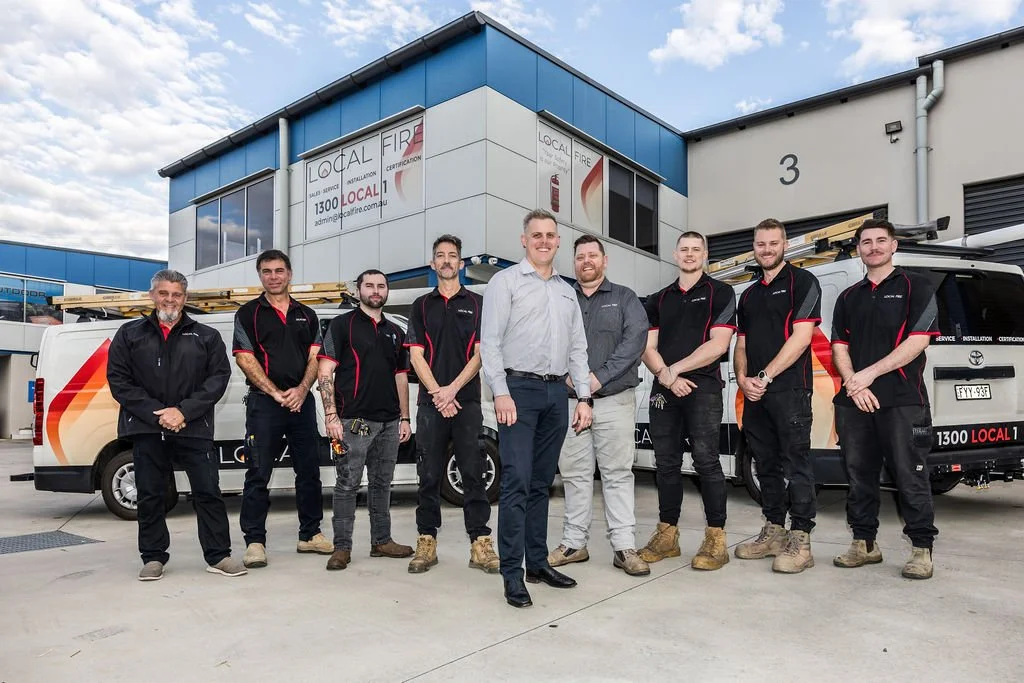
Local Fire has serviced strata and commercial buildings across Wollongong, Port Kembla and the wider Illawarra for over 20 years. We handle the inspections, the maintenance, the passive fire work and the reporting that keeps your statement valid, so your Owners Corporation or strata manager isn't left piecing it together at deadline time.
If you're not sure where your building stands, give us a call on 02 4274 0596 or get in touch and we'll talk you through it.